Beyond the Mint: How Collectible, Challenge, and Sobriety Coins Turn Metal into Meaning
To most people, a coin is little more than pocket change — a jingling nuisance or a timely parking meter rescue. But if you stop and look closer, you will discover a hidden universe where coins become storytellers. For centuries, coins have funded empires, commemorated royalty, and sparked wars. Yet some of the most remarkable coins have very little to do with buying or selling. Collectible coins, challenge coins, and sobriety coins each carry a different kind of wealth — one built from history, brotherhood, resilience, and personal transformation.
Collectible Coins: A Connoisseur’s Window to the Past
Collectible coins are not ordinary money. They are pieces of history that happen to be made of metal. Enthusiasts across the globe hunt for coins not merely because they are old, but because each one represents a snapshot of a vanished era — an emperor’s face, a nation’s fall, or a forbidden minting error. A serious collector can spend decades tracing the path of a single rare coin, studying the strike quality, luster, and wear pattern.
Unlike bullion, which is measured by its gold or silver weight, the value of a collectible coin comes from several fascinating factors:
- Rarity: Coins with small mintages often have dramatically higher values.
- Grading: Professionals assess a coin’s condition on a 70-point scale; even one point can mean the difference between dinner money and an auction record.
- Provenance: A coin once owned by a historic figure carries a story no catalog can fully quantify.
- Error appeal: Misprinted dates, doubled dies, and off-center strikes are coveted by collectors as accidental art.
Coins like the 1933 Saint-Gaudens Double Eagle, the 1794 Flowing Hair Silver Dollar, and the legendary 1804 Draped Bust Dollar have sold for millions. But collecting is not only about deep wallets. Many hobbyists enjoy assembling Lincoln cents, foreign coins, or ancient Roman denarii on a modest budget. The collection becomes an archive of human civilization — a tactile timeline that can be held, rotated, and admired under the beam of a lamp.
Challenge Coins: Unbreakable Symbols of Belonging
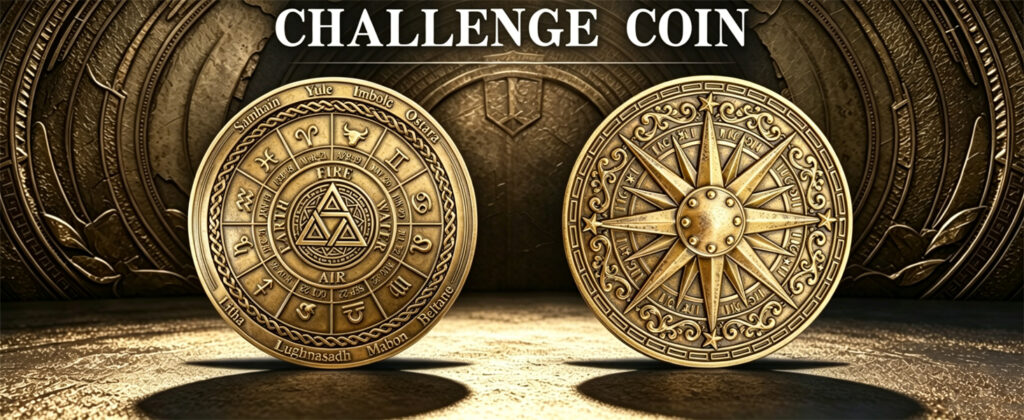
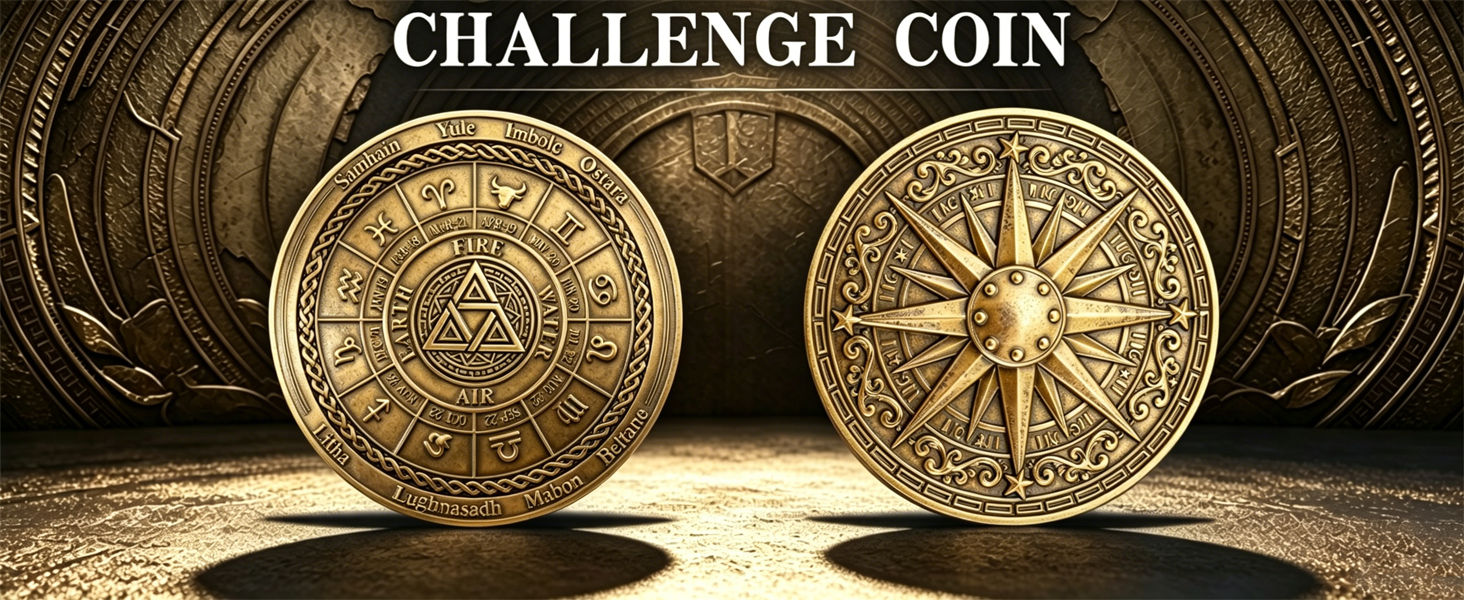
If collectible coins are doors to the past, challenge coins are keys to a tribe. These engraved tokens are traditionally used by military units, law enforcement agencies, and fire departments to honor acts of excellence, mark membership, and strengthen team unity. They are small, often bearing a unit emblem or motto, but they carry an emotional weight far greater than their size.
Legend traces the origin of challenge coins to World War I. A wealthy American lieutenant ordered bronze medallions struck for his squadron members. One pilot kept his medallion in a leather pouch around his neck. When his plane was shot down over German territory and his identity was stripped, the pouch saved his life — French captors recognized the squadron insignia and released him. From that moment, the “challenge” tradition was born.
“The coin does not only represent an organization. It represents every sacrifice made by the person sitting next to you.” — a retired Marine officer
Challenge coins are rooted in ritual. The tradition of the “coin check” requires service members to carry their coin at all times. If someone calls a challenge, others must quickly present their coins; anyone who fails buys a round of drinks. These customs forge a bond among strangers, reminding them that they share a mission, a code, and a family stitched together in uniform. Today, challenge coins have expanded into corporate teams, nonprofit groups, and even presidential headquarters, proving that the desire for belonging never goes out of style.
Sobriety Coins: Milestones on the Road to Redemption
Among the most intimate and powerful tokens are sobriety coins. Often called chips or medallions, they are issued in addiction recovery programs to mark the length of time a person remains drug- or alcohol-free. Unlike medals given to heroes, sobriety coins are given to the wounded — those battling the demons of dependency one day at a time.
The tradition is simple yet profound. In many groups, members receive a coin for twenty-four hours of sobriety, then for thirty days, sixty days, ninety days, six months, one year, and each subsequent milestone. When someone picks up a new chip, they often do so in front of the group, earning applause not for perfection but for progress.
Why are these coins so effective? Here are a few reasons:
- Tangible proof: A chip turns an invisible struggle into a physical object of achievement.
- Anchoring symbolism: The weight in your pocket becomes a reminder of why you keep moving forward.
- Community ritual: Earning a chip in public reinforces accountability and fellowship.
- Rebuilding self-worth: For people who have lost everything to addiction, a small coin can be the first badge of restored identity.
The materials of sobriety coins often evolve with time — brass, bronze, or plastic for early milestones, and heavier gold or silver for anniversaries. But no material outshines the quiet pride in a person’s eyes when they accept a one-year chip after a lifetime of being promised they never could.
Why These Three Coins Share One Common Thread
At first glance, the serious collector, the deployed soldier, and the person in recovery have little in common. But collectible coins, challenge coins, and sobriety coins all speak to a universal human craving: the need to make the intangible tangible. In a digital world of rapid clicks and fading notifications, coins ground us. They carry weight. They demand attention. They age gracefully.
A collectible coin memorializes a moment in civilization. A challenge coin memorializes loyalty among soldiers. A sobriety coin memorializes the most difficult and joyful battle — learning to live again. Each coin begins as a plain piece of metal yet becomes priceless through the story attached to it. They all share one beautiful paradox: they are worthless in their raw form, and utterly invaluable after human hands and hearts touch them.
Whether you are an investor in silver dollars, a veteran holding a unit’s badge, or someone celebrating two years of sobriety, you already know the secret that few outsiders realize — that the true mint happens not in factories, but in the moments we dedicate to meaning.
So the next time you find a coin tucked beneath a cushion or forgotten in an old jacket, do not dismiss it. Turn it over. Trace its ridges. For a moment, you might just feel a story trying to spend itself through your fingertips.