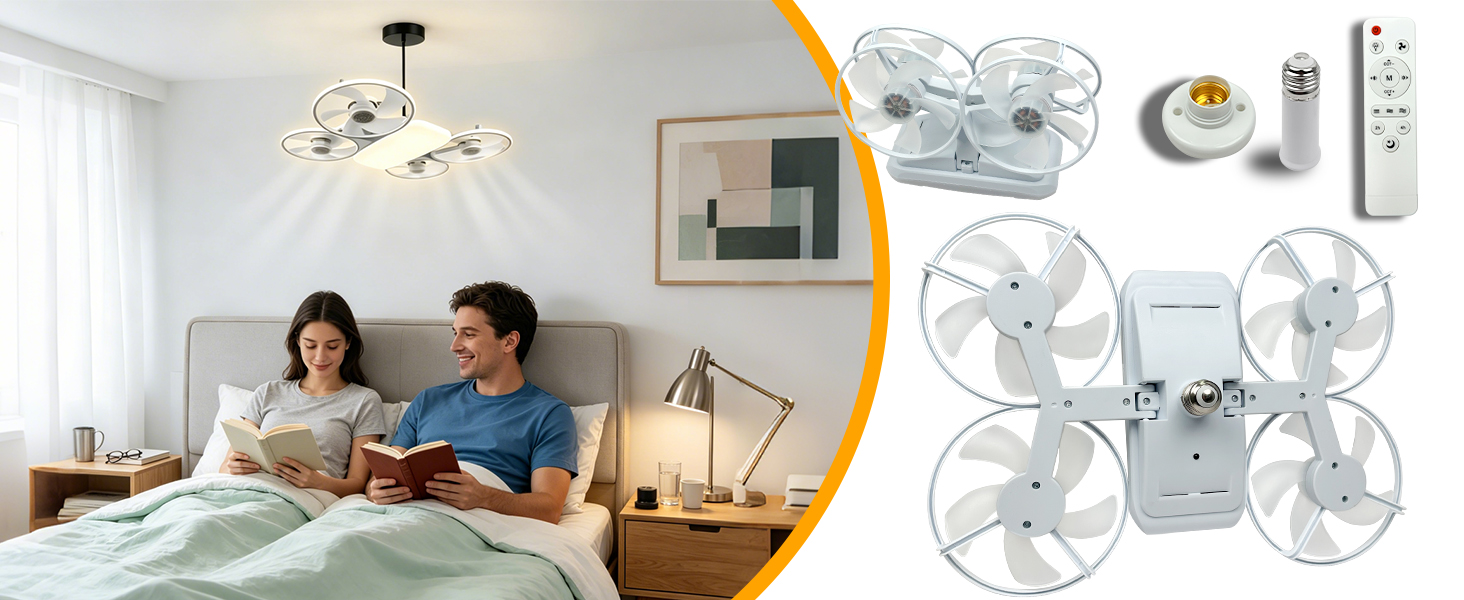
Ceiling Fan Light, Drone Ceiling Fan, and Remote Control: How to Choose the Right Airflow for Every Room
A ceiling fan is one of those home upgrades that quietly changes the way a room feels. It can make a stuffy bedroom more comfortable, add a decorative focal point to a living room, and even help reduce reliance on air conditioning. But today’s fans are not all the same. Some are defined by their lighting, some by smart motor technology, and others by the convenience of a handheld controller. Understanding the differences between a ceiling fan light, a drone ceiling fan, and a ceiling fan with remote can help you choose a model that fits your space, your habits, and your design taste.
Start With the Room, Not the Fan
Before comparing features, measure the room and think about how you use it. A fan that feels refreshing in a large open-plan living area may overwhelm a small home office. Airflow, blade span, ceiling height, and lighting needs all matter. The right choice is not simply the most powerful fan on the page; it is the fan that suits the room’s size and daily routine.
Small rooms and focused comfort
In bedrooms, dens, and compact studies, a smaller blade span usually works best. You want a gentle, consistent breeze rather than a wind tunnel. Look for adjustable speeds and a motor that runs quietly at low settings. If the room has no overhead fixture, a ceiling fan light can solve two problems at once: it circulates air and provides general illumination without taking up floor or table space.
Large rooms and open spaces
Larger rooms need broader blade spans and stronger airflow. In these spaces, consider the ceiling height and the fan’s mounting style. A flush-mount design can work well in low-ceiling rooms, while a downrod may improve clearance and airflow in taller spaces. For open-plan areas, choose a fan with multiple speed settings so you can adjust comfort through the day.
Design tip: Match the fan’s finish to the room’s dominant hardware, then use the light fixture as a subtle accent rather than a competing focal point.
The Appeal of a Drone Ceiling Fan
The term drone ceiling fan often describes a fan with a sleek, modern, almost aerodynamic look. These fans tend to emphasize smooth lines, compact motor housings, and blades that look more contemporary than traditional wooden paddles. The result is a fixture that feels intentional rather than purely functional. In a modern bedroom, a minimalist living room, or a renovated workspace, a drone ceiling fan can add a clean visual edge while still delivering the air circulation you expect.
Style is only part of the story. When shopping for this type of fan, check the motor quality, noise level, and warranty. A sleek design is appealing, but long-term comfort depends on balanced blades, stable mounting, and reliable speed control. If the fan will be used at night, quiet operation should be a top priority.
- Check the blade pitch: A good pitch supports effective airflow without excessive noise.
- Look for reversible modes: This helps with seasonal comfort in both summer and winter.
- Consider the light kit: Integrated lighting can keep the design streamlined.
Convenience Makes a Difference: Ceiling Fan With Remote
A ceiling fan with remote is especially useful in bedrooms, high-ceiling rooms, and spaces where wall switches are not conveniently placed. Instead of reaching for a pull chain, you can adjust speed, turn the light on or off, and sometimes reverse the airflow from across the room. This is a small feature with a large everyday impact, particularly for children, older family members, or anyone who values effortless control.
Remote-controlled models also offer a cleaner look. Without dangling chains, the fan appears more polished and modern. Before buying, confirm that the remote is included rather than sold separately, and check whether the receiver is compatible with your home’s wiring. A wall cradle or magnetic holder is also worth considering, because small remotes are easy to misplace.
Lighting and control should work together
Many modern fans combine dimmable lighting, multiple speeds, and remote operation in one unit. This can be convenient, but it is important to think about color temperature. A bright, cool light may suit a kitchen or workspace, while a warmer light is often better for bedrooms and evening relaxation. If the fan will serve as the main light source, choose a model with enough brightness and a dimming option that feels comfortable at night.
Installation, Maintenance, and Long-Term Value
Proper installation matters as much as product selection. Fans should be mounted to a ceiling-rated electrical box and installed according to the manufacturer’s instructions. If you are unsure about wiring or ceiling support, hire a qualified electrician. Once installed, keep the blades clean and check that screws remain secure. A balanced fan runs more quietly and lasts longer.
- Measure the room and confirm the recommended blade span.
- Decide whether lighting, remote control, or smart features are essential.
- Check ceiling height and choose the correct mounting style.
- Read reviews for noise, motor quality, and warranty support.
Ultimately, the best fan is the one that fits the way you live. A ceiling fan light can simplify a small room, a drone ceiling fan can bring modern style to a larger space, and a ceiling fan with remote can make daily comfort easier. By balancing design, airflow, lighting, and control, you can choose a fan that looks good, performs well, and remains useful for years.